People Pillar
Leadership Development Selling Skills Soft Skills & EQ Change Management Culture Transformation Team Building & Management
Business Solutions
Process Engineering HR Consulting Performance Systems Talent Management Strategy
Company
Our Approach About Us Founder Clients Vision & Mission Business Health Meter →
Talk to us →
Talent Management Strategy
Since 2014 · Jaipur, India

A talent plan that keeps pace with where the business is going, not just where it's been.

Most talent decisions get made reactively, a role opens and gets filled, someone leaves and gets replaced. We help you build a talent strategy that looks ahead: who you'll need, who's ready to step up, and who's at risk of walking out the door before you've planned for it.
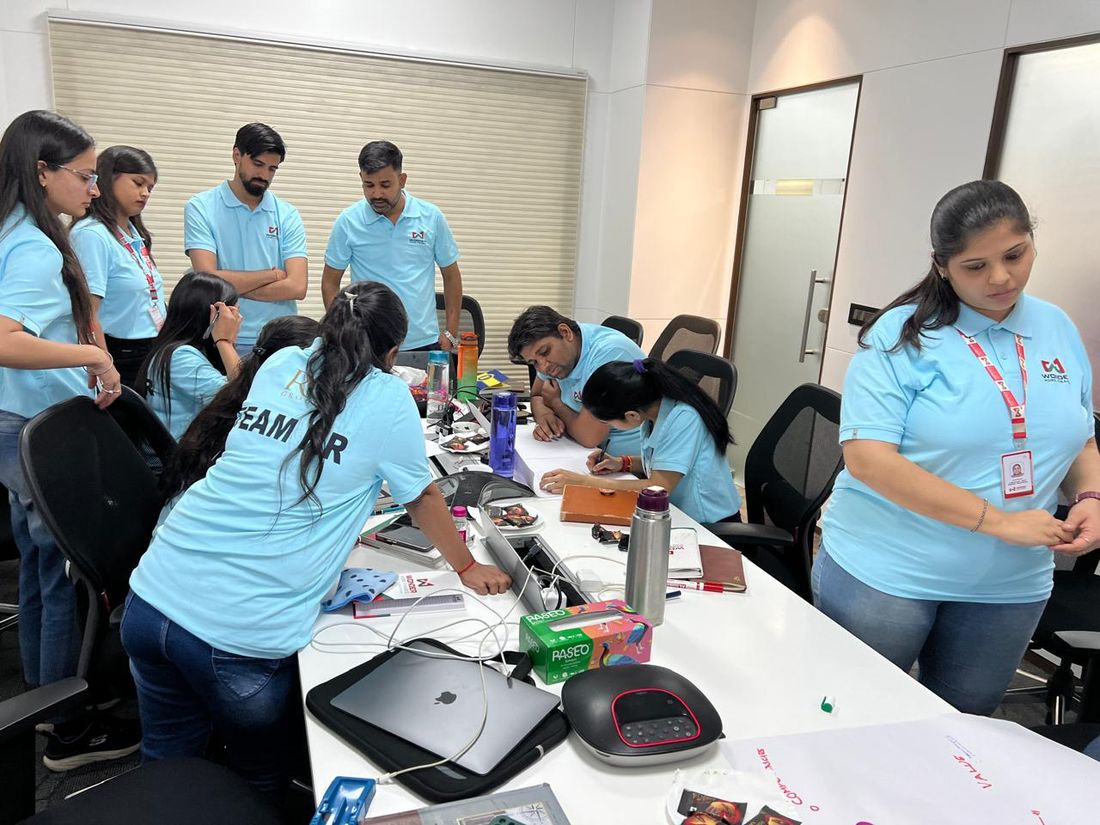
Ybiance talent management strategy and workforce planning engagement in progress
Talent Strategy Engagement
Ybiance Business Solutions
10+
Years of impact
200+
Organizations trained
82,000+
Participants trained
4
Countries served
The Basics

What talent management strategy actually means.

Talent management strategy is the deliberate plan an organization uses to attract, develop, retain, and prepare successors for the people it depends on most. Instead of hiring reactively and hoping the right people stick around, it treats your workforce as something to plan for, the same way you'd plan revenue or production.

A working talent strategy usually covers five connected areas: bringing the right people in, developing their capability once they're here, giving them a visible path to grow, keeping them engaged enough to stay, and preparing a real successor for every role the business can't afford to leave empty. We walk through exactly how these five fit together further down this page.

In One Line

"If our five most important people left tomorrow, do we have a real plan, or just hope?"

Who This Is For

Sound familiar?

01
Hiring Only When A Seat Is Empty
Workforce planning happens reactively, after someone quits, instead of ahead of the need.
02
No Clear Bench For Key Roles
If a critical person left tomorrow, there's no obvious internal successor ready to step in.
03
Good People Leaving Quietly
Attrition patterns exist but nobody's connected them to a retention plan.
Define The Problem

Why talent planning usually stays reactive

Most organizations only think about talent when there's a gap to fill. A resignation triggers a job posting, a promotion happens because someone was next in line, not because they were prepared for it. That's not a strategy, it's damage control.

A real talent strategy starts earlier: mapping which roles are business-critical, who's ready to grow into them, where the retention risk actually sits, and what it would take to keep your strongest people engaged before they start looking elsewhere.

At Ybiance, we build this as a working plan tied to your actual business goals and org structure, not a generic HR framework that sits in a slide deck no one revisits.

"That's not a strategy, it's damage control."

Most talent gaps only get discovered the day someone resigns, not before. By then, you're reacting, not planning.

How We Work

Our approach to talent management strategy

01
Diagnose & Analyse
We map your critical roles, current bench strength, and attrition patterns against where the business is headed.
02
Design
We build the workforce plan, succession map, and retention priorities specific to your structure and growth plans.
03
Develop
We build the development plans, readiness assessments, and retention actions needed to close the gaps we've found.
04
Implement & Evaluate
We support rollout and track bench readiness and attrition trends to confirm the plan is actually working.

Recognize your organization in any of this so far?

Talk to us →
Our Framework

How the pieces fit together.

Five parts of one connected plan, not five separate documents. Each piece feeds the next, and all five build toward the same center: a strong bench of people who are ready, developing, and staying.

The Talent Management Strategy Fan

Talent attraction brings the right people in, and employee development builds their capability once they're here. Career pathing gives them a reason to keep growing with you, engagement and retention keeps them motivated day to day, and succession planning makes sure the next step is already prepared for. Five parts, one continuous plan.

The Talent Management Strategy Fan — Five Parts A five-segment fan labeled Talent Attraction, Employee Development, Career Pathing, Engagement and Retention, and Succession Planning, converging on a shared center Talent Attraction Employee Development Career Pathing Engagement & Retention Succession Planning
1
Talent Attraction
Brings the right people in.
2
Employee Development
Builds their capability once they're here.
3
Career Pathing
Gives them a reason to keep growing with you.
4
Engagement & Retention
Keeps them motivated day to day.
5
Succession Planning
Makes sure the next step is already prepared for.
Integrated Talent Management

The five-part fan above is the outward flow. This is what holds it together underneath: seven connected functions, from strategy and sourcing through to compensation, all reading off the same set of systems and metrics rather than running as disconnected HR activities that don't talk to each other.

Integrated Talent Management — Seven Connected Functions Seven functions arranged in a circle around a central hub of talent systems and metrics: Talent Strategy and Planning, Sourcing and Recruiting, Learning and Development, Succession Planning, Leadership Development, Compensation and Rewards, and Retention and Engagement Talent Systems & Metrics 1 2 3 4 5 6 7 Talent Strategy & Planning Sourcing & Recruiting Learning & Development Succession Planning Leadership Development Compensation & Rewards Retention & Engagement
1
Talent Strategy & Planning
Sets direction from where the business is actually headed.
2
Sourcing & Recruiting
Brings people in against real, planned needs.
3
Learning & Development
Builds capability once they're here.
4
Succession Planning
Names a real successor for every critical role.
5
Leadership Development
Prepares people to lead, not just perform.
6
Compensation & Rewards
Keeps pay and incentives aligned to contribution.
7
Retention & Engagement
Keeps people motivated enough to stay.

Every function on the outer ring shares the same underlying data, so a retention risk flagged in one system shows up when you're building a succession map in another, instead of living in two spreadsheets that never talk to each other.

Why Ybiance

What makes this different

01
Built Around Your Critical Roles
We start with which roles the business can least afford to leave empty, not a generic org-wide sweep.
02
Development, Not Just Documentation
Succession maps come with real development plans for the people on them, not just a name on a chart.
03
Retention Grounded In Your Own Data
Retention priorities built from your actual attrition patterns, not assumptions about why people leave.
04
A Decade Of Track Record
10+ years, 200+ organizations, 82,000+ participants across 24 sectors.
The Impact

What changes on the other side

01
A Real Bench For Critical Roles
Named successors with active development plans, not a hope that someone will figure it out.
02
Hiring That's Planned, Not Panicked
Workforce needs anticipated ahead of the gap, instead of triggered by a resignation letter.
03
Retention Risk You Can See Coming
Attrition patterns tracked and acted on before your strongest people start interviewing elsewhere.
What's Included

From reactive hiring to a plan that looks ahead

Talent work grounded in your actual org structure and growth plans, not a generic HR template.

01
Workforce & Critical Role Planning
Identifying which roles the business can least afford to leave vacant, and planning ahead for them.
02
Succession Mapping
Naming realistic internal successors for key roles, with honest readiness assessments.
03
Talent Development Planning
Building the specific growth plans that get a successor from ready-in-name to ready-in-practice.
04
Retention Risk & Action Planning
Reading attrition patterns and building targeted plans for the people most at risk of leaving.
05
Internal Talent Mapping
Surfacing who inside the organization is ready to move, and where they'd fit best.
06
Career Pathing Frameworks
Giving employees a visible, credible path forward instead of an unclear one.
Common Questions

Questions people usually ask us first.

Q
How is talent management different from regular HR management?
HR management runs the operational side, payroll, compliance, policy. Talent management strategy is forward-looking: who will the business need in one to three years, who's ready to grow into critical roles, and what happens if a key person leaves tomorrow. HR keeps things running; talent strategy keeps you staffed for where you're going.
Q
Do small or mid-sized companies need this, or is it just for large enterprises?
Arguably smaller companies need it more. A 500-person company absorbs one resignation easily. A 30-person company where one person holds most of the institutional knowledge often can't. Smaller organizations tend to carry the most concentrated talent risk with the least formal plan for it.
Q
How long does building a talent strategy actually take?
Diagnosis and design, mapping critical roles, bench strength, and attrition patterns, usually takes a few weeks. Full implementation with real development plans and a working succession map is more realistically a one to two quarter effort, since it depends on real conversations with your people, not just a document.
Q
What's the difference between succession planning and talent management strategy?
Succession planning is one piece of the larger system, naming who could step into a critical role. Talent management strategy is what makes that name credible: the development that got them ready, and the retention work that keeps them around long enough to actually take the step.
Q
How do we know if we actually need this?
Try this test: name your five most business-critical roles, then name who could step into each one tomorrow. Obvious gaps, or answers that involve guessing rather than pointing to a real development plan, are a clear sign you're running on hope instead of a strategy.

Ready to find out where your talent plan actually has gaps?

Tell us which role you'd struggle to fill tomorrow — that's usually where the real gap is.

Talk to us →